Welcome to our websites!

Why Choose a Jewelry Box for Your Business?

A Jewelry Box is more than protective packaging for a retail business. It shapes the customer’s first physical impression of a product. When a customer opens a sturdy box, they notice the texture, fit, and presentation immediately. These details can make a simple purchase feel considered and memorable.

In jewelry retail, packaging must protect delicate pieces from scratches, tangling, moisture, and unnecessary movement. A well-designed insert keeps a ring centered and prevents earrings from shifting during delivery. Strong hinges and secure closures also reduce damage during handling. Businesses can choose velvet, recycled paper, wood, or compact cardboard, depending on product value and brand identity. The right material matters.

It supports your brand.

A Jewelry Box can also improve storage and repeat recognition. A customer may keep the box on a dresser, where its color or logo remains visible. That small reminder can influence future buying decisions. However, attractive packaging does not guarantee success. Oversized boxes increase shipping costs, while poor materials may disappoint customers. Some businesses focus too heavily on appearance and ignore practical testing.

A reliable supplier should provide consistent sizing, accurate printing, durable construction, and clear production details. Sample testing is essential before placing a large order. Try opening the box repeatedly. Shake it gently. Check how the jewelry sits after transport. These simple checks reveal weaknesses that photographs often hide. The best Jewelry Box balances protection, presentation, cost, and responsible material choices. It should serve the customer first, while supporting a business’s long-term reputation.
Why Choose a Jewelry Box for Your Business?

What Is a Jewelry Box and What Role Does It Serve in Business?

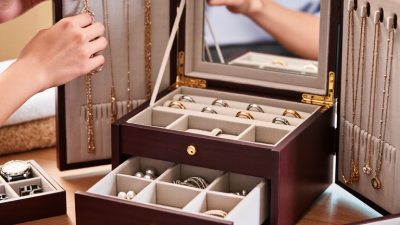
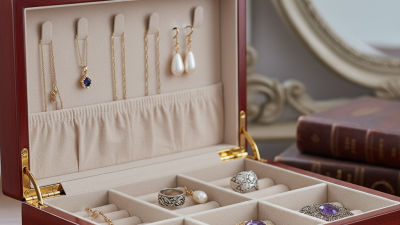
A jewelry box is a fitted container designed to protect, present, and organize jewelry during storage, delivery, and display. It may use cardboard, wood, fabric, foam, or molded inserts. Its role is practical before it is decorative.

A firm insert prevents a ring from moving. A soft lining reduces surface contact and unwanted scratches. A clean opening also creates a brief moment of trust for the customer. That moment matters in a product category where detail often influences perceived value.

Business value extends beyond appearance. A well-designed box can reduce damage claims, simplify packing, and support consistent presentation across sales channels.

McKinsey’s consumer packaging research found that 60% to 70% of respondents were willing to pay more for sustainable packaging.

IBM’s 2020 consumer study also reported that 57% of consumers were willing to change purchasing habits to reduce environmental impact.

These findings suggest that material choice affects perception. However, sustainable does not mean perfect. An oversized box still wastes space, even when its paper is recyclable.

Tips: Match the box size to the jewelry item. Test the insert with repeated opening and closing. Choose durable materials with clear recycling information. Keep decoration restrained. A complicated box may impress once, then frustrate customers and increase shipping costs. Review the design after real orders, not only in a showroom.

How Jewelry Boxes Protect Products and Improve Their Presentation

Jewelry boxes do more than hold a product. They create a controlled space around it. During packing, transport, and shelf handling, jewelry can face scratches, dust, pressure, and tangled chains. A rigid outer shell reduces crushing risks. A soft, fitted insert limits movement inside the box. That small detail matters when a ring shifts against a polished surface.

Materials also affect protection. Velvet, microfiber, or smooth molded inserts can reduce abrasion when properly finished. Hinges should open smoothly, while closures should stay secure without forcing the box. For humid environments, businesses should consider moisture-resistant materials and dry storage areas. No box prevents every problem. Poor sizing can still let earrings or pendants move freely.

Presentation begins when the customer lifts the lid. A clean interior, balanced spacing, and accurate product placement make the item easier to inspect. Strong contrast between the jewelry and the insert can reveal fine details, including stone color and metal texture. It also supports more consistent product photography. From practical packaging work, I have found that simple designs often look more reliable than crowded interiors. Still, appearance can be overvalued. A beautiful box with weak hinges or loose padding becomes disappointing quickly. Checking fit, surface quality, and closure strength before regular use helps businesses protect products without hiding their character.

Why Choose a Jewelry Box for Your Business? - How Jewelry Boxes Protect Products and Improve Their Presentation

A practical comparison of common jewelry-box structures, protection functions, and presentation benefits for retail, e-commerce, gifting, and wholesale operations.

Packaging Dimension Common Jewelry Box Format Product Protection Function Presentation and Customer Experience Practical Business Consideration
Surface protection Fabric-lined box Molded insert Separates jewelry from other items and helps reduce surface scratches, rubbing, and metal-to-metal contact during handling. Creates a clean, organized interior and gives the product a finished appearance when the lid is opened. Suitable for rings, earrings, pendants, and other pieces that require a soft contact surface.
Tangle and movement control Slot insert Necklace panel Individual compartments Holds chains, bracelets, and small components in defined positions, limiting movement and tangling during transport. Displays each item in a deliberate arrangement instead of allowing pieces to arrive loose or disordered. Especially useful for e-commerce shipping, where packages may be turned, stacked, or moved repeatedly.
Impact and compression resistance Rigid paperboard box Two-piece box Drawer-style box Provides a stronger physical barrier than an unstructured pouch and helps shield contents from light crushing and abrasion. Maintains a firm shape and supports a more substantial unboxing experience. Rigid formats are generally appropriate for premium presentation, gift orders, and products that need added structure.
Moisture and contamination control Closed-lid box Box with protective insert Reduces exposure to dust, fingerprints, and handling contamination while the product is stored or displayed. Keeps the jewelry looking clean and presentation-ready before the customer opens the package. Storage boxes should be kept dry; packaging alone does not replace appropriate care for oxidation-sensitive metals.
Product identification Printed sleeve Label area Window box Allows product details, care instructions, and handling information to remain with the item. Improves clarity at the point of sale and can make the product easier to recognize in storage or gifting situations. Useful for inventory organization, product education, returns processing, and consistent retail presentation.
Gift readiness Lid-and-base box Ribbon closure Presentation box Protects the jewelry between purchase and gifting while keeping the item secured inside the package. Reduces the need for additional wrapping and creates a more intentional gift-opening moment. Can support seasonal collections, special occasions, loyalty programs, and higher perceived product value.
Storage after purchase Reusable box Compartment box Gives customers a dedicated place to store jewelry and helps reduce contact with hard surfaces or other accessories. Extends the usefulness of the packaging beyond the sale and keeps the product presentation consistent at home. Reusable packaging can increase functional value, although final performance depends on construction, materials, and care.
Brand presentation without printed branding Color-coordinated box Textured paper finish Minimalist design Consistent construction and a secure insert help protect the product regardless of the exterior decoration. Color, texture, proportions, and opening style can communicate quality without displaying a company name or logo. Design consistency helps create a recognizable packaging system across multiple jewelry collections.
Shipping suitability Box-in-box packaging Rigid inner box with mailer An inner jewelry box combined with an outer shipping package provides separate protection for presentation and transport. Helps the customer receive a clean presentation box even when the outer parcel shows normal handling marks. For e-commerce, use suitable void fill and an outer mailer or carton; a jewelry box by itself is not a complete shipping system.
Material efficiency Paperboard box Foldable box Replaceable insert Lightweight paper-based structures can provide organized protection without adding unnecessary bulk. Clean folding lines and a well-fitted insert can create a polished appearance with a simple construction. Material selection should consider product weight, required rigidity, shipping conditions, recyclability, and local waste systems.
Note: The specifications and benefits shown are general packaging principles used across jewelry retail and e-commerce. Actual protection depends on box construction, insert fit, material quality, product dimensions, shipping conditions, and storage practices.

Key Business Benefits of Using Jewelry Boxes

For a jewelry business, packaging is part of the selling experience. A jewelry box protects delicate pieces from scratches, dust, and tangled chains during storage and delivery. In my experience, a firm insert prevents earrings and rings from shifting inside the box. That simple feature can reduce avoidable damage and customer complaints.

Presentation also affects perceived value. A clean box gives customers a careful unboxing moment. Soft lining, accurate sizing, and a secure closure make small pieces feel more considered. It creates trust before the customer wears the jewelry. A box can also support efficient stock handling. Staff can identify, stack, and transport items more safely than with loose pouches. This matters during busy sales periods.

However, boxes are not automatically the best solution. Oversized packaging increases material use and storage costs. I have seen attractive boxes become inconvenient because they used too much space. Businesses should match the box size to the product and shipping method. Reusable or recyclable materials may strengthen a responsible purchasing policy, but claims should be verified carefully. Clear quality checks are useful too. Check hinges, inserts, edges, and closures before distribution. Small faults often appear after repeated handling. A practical jewelry box protects products, supports consistent service, and gives businesses better control over everyday operations.

How to Choose the Right Jewelry Box for Your Brand

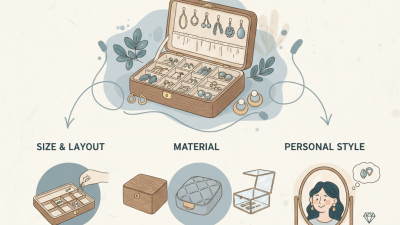
Choosing the right jewelry box starts with the product, not the logo. Measure the longest chain, widest pendant, and tallest ring setting before selecting an insert. A box that presses a clasp can create damage and customer complaints. Velvet feels soft, but it can collect dust. Paper-based inserts may feel less luxurious, yet they often support easier recycling. Check hinge strength, magnet alignment, surface resistance, and drop-test performance with real samples.

Packaging also shapes perceived value. Dotcom Distribution’s 2021 consumer survey reported that 40% of shoppers were more likely to buy again when an order arrived in premium packaging. That figure supports investment, but it does not justify expensive decoration alone. Your box should match the product’s price, shipping method, and unboxing experience. A lightweight folding box may suit frequent online orders, while a rigid box offers stronger presentation for ceremonial purchases. Test both before deciding.

According to Smithers’ The Future of Global Packaging to 2028, packaging development is increasingly influenced by sustainability, material efficiency, and regulatory pressure. Ask suppliers for material specifications, recycled content data, and realistic disposal guidance. Avoid vague environmental claims. They weaken trust. Request production samples, inspect color consistency, and confirm minimum order quantities. I would also test the box with damp hands and one-handed opening. Small failures appear there. Some elegant boxes are awkward in practice. That is worth reconsidering before committing to a large production run.

Why Choose a Jewelry Box for Your Business?

How to Choose the Right Jewelry Box for Your Brand

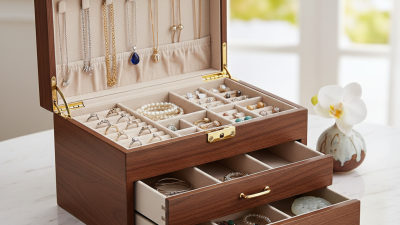
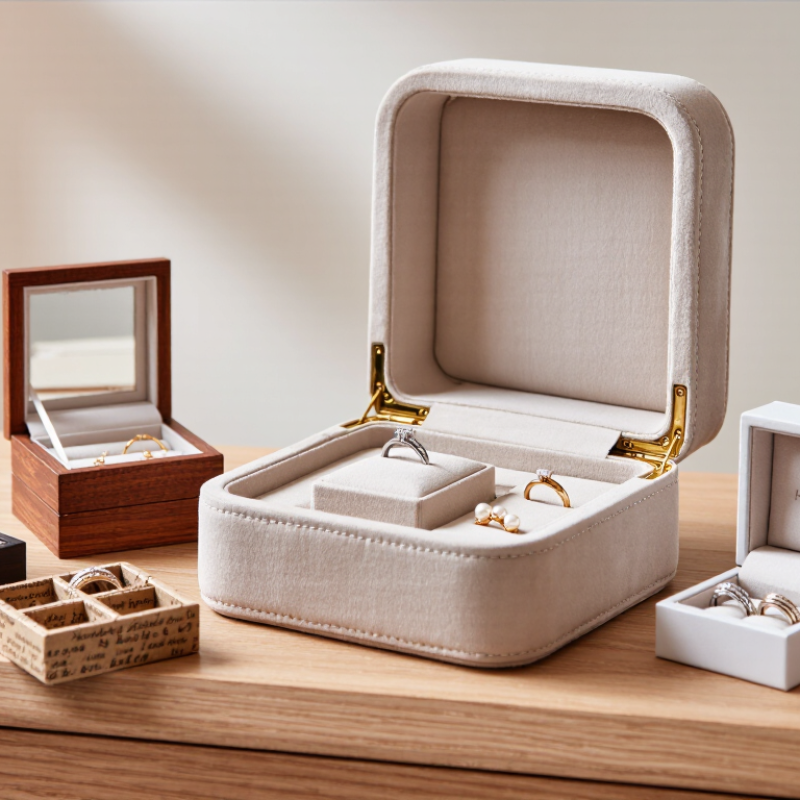
Box size should match the jewelry category while leaving enough space for protective inserts. Compact ring and earring boxes reduce material use and shipping volume, while larger necklace and bracelet boxes provide the extra room needed for organized presentation and protection.

Best Practices for Using Jewelry Boxes in Daily Operations

Jewelry boxes support daily operations by protecting pieces during storage, handling, and customer service. Choose boxes that match the item’s size, weight, and surface finish. A ring should not move inside its compartment. Loose movement can cause scratches, bent settings, or misplaced parts. Soft, lint-free interiors are practical for polished metals and delicate stones. Small boxes also make counting easier at the end of a shift.

Create a simple packing routine for every employee. Check the item against its record before placing it inside. Then inspect the hinge, lining, and closure. Write the stock reference on a removable label, not directly on the box. Keep filled boxes away from sinks, direct sunlight, and high humidity. Store heavier boxes below lighter ones to reduce tipping. This sounds basic. It prevents avoidable damage.

Use separate trays for new arrivals, customer returns, repairs, and ready-to-display items. Never mix them during busy periods. A clean worktable helps, but it does not replace careful checking. In practice, staff may rush when several orders arrive together. A short verification pause can catch the wrong size, missing insert, or damaged clasp. Review the system monthly and adjust it when repeated mistakes appear. Some boxes may look efficient but waste space. Test them during real shifts before ordering in large quantities.