7 Tips for Choosing a Genuine Leather Storage Box
Choosing a Genuine Leather Storage Box requires more than admiring its warm color and polished surface. The box should protect watches, documents, jewelry, or keepsakes without creating new problems. Look closely at the leather grain, edge finishing, stitching, lining, hardware, interior structure, size, and seller reliability. A sharp chemical smell may suggest heavy finishing or poor ventilation. Uneven grain is not always a defect, though; natural leather often carries small scars and subtle color changes.
Leathercraft educator Peter Nitz explains, “Good leather storage is about protecting the material while allowing it to breathe.” That principle matters in daily use. A tightly sealed box may trap moisture, while a thin lining can scratch delicate items. Check whether the compartments hold their shape after pressing them gently. Examine the hinges, too. They should open smoothly without pulling the leather. Small details matter.
No checklist is perfect.
A Genuine Leather Storage Box should also match your environment. Humid rooms need breathable interiors and sensible placement away from direct sunlight. Dry rooms may require occasional conditioning, but excessive oil can darken the surface and weaken its finish. Ask whether the leather is full-grain, top-grain, or bonded material. Confirm the dimensions with a ruler, not visual judgment. I would also question unusually low prices, although price alone cannot prove quality. The following seven tips offer a practical way to compare craftsmanship, function, care requirements, and trustworthy purchasing information.
Understanding Genuine Leather and Its Key Characteristics
Understanding Genuine Leather and Its Key Characteristics
Genuine leather comes from animal hide, then undergoes cleaning, tanning, drying, and finishing. It is not a quality grade. It simply identifies real leather rather than synthetic material.
The Food and Agriculture Organization reports that livestock hides are a major global raw material for leather production. Leather Naturally also notes that more than 1.8 billion hides and skins are processed worldwide each year. These figures explain why leather varies widely in thickness, grain, softness, and durability. A storage box should feel substantial, not strangely rigid or plastic-like. Natural grain usually shows small pores, uneven lines, and minor scars. Perfect uniformity can indicate heavy surface coating.
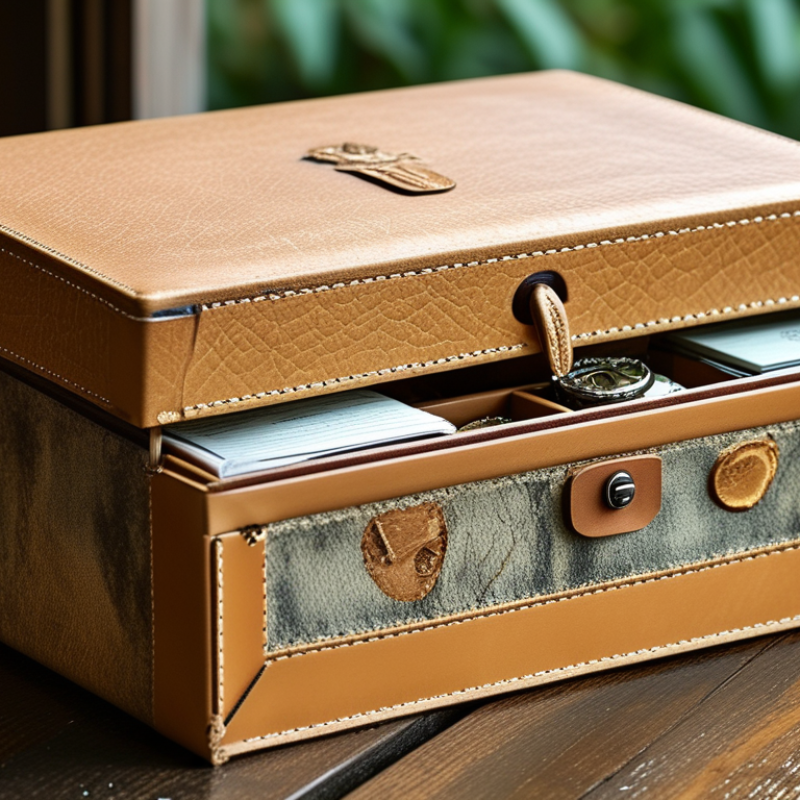
Check the edges and interior lining carefully. A genuine leather edge may show compressed fibers, while a synthetic edge often looks fused or perfectly sealed. The smell should be mild and earthy, never strongly chemical. I once trusted a convincing surface finish and ignored the hollow feel underneath. That was a poor test. Touch matters.
The Global Leather Goods Market report by Grand View Research estimated the market at over 460 billion dollars in 2023. Rapid growth encourages better finishing, but it also makes unclear labeling more common. Ask whether the box uses full-grain, top-grain, corrected-grain, or split leather. ISO 2418 and ISO 2419 provide standardized methods for leather sampling and physical testing. Still, these standards cannot replace careful inspection. Look for even stitching, firm corners, and a stable lid. Small flaws are normal. Weak construction is not.
7 Tips for Choosing a Genuine Leather Storage Box - Understanding Genuine Leather and Its Key Characteristics
Genuine leather is made from animal hide and naturally shows variations in grain, pores, texture, and color. When choosing a leather storage box, inspect the material, construction, finish, and hardware rather than relying only on appearance.
The chart presents a practical buyer-attention weighting for seven genuine-leather checks. The percentages are a suggested checklist allocation, not a universal laboratory standard. Natural grain, visible edge fibers, a rich leather aroma, consistent stitching, durable hardware, protective finishing, and clear material labeling are useful signs to evaluate together.
Checking Leather Quality, Grain, and Craftsmanship
A genuine leather storage box begins with the hide, not its label. The FAO Statistical Yearbook 2023 records more than 1.5 billion cattle, sheep, and goat skins entering global supply each year. This scale makes careful inspection essential. Press the surface gently. Full-grain leather should show natural pores, slight variation, and a warm, fibrous smell. A perfectly uniform surface may indicate heavy coating or corrected grain.
Check seven details before buying. Look for a consistent grain pattern, firm but flexible panels, clean edge finishing, and tight stitching. Examine corners closely. Poor cuts often reveal loose fibers or uneven dye. Open the lid several times. The hinge should move smoothly without cracking sounds. Inspect the lining and base, too. A beautiful exterior cannot rescue weak structure. ISO 2418:2023 supports standardized leather sampling, while ISO 3376 specifies tensile-strength testing; serious manufacturers should understand these methods, even when buyers cannot perform laboratory tests.
I once trusted softness too quickly. That was a mistake. Excessive softness can hide thin leather or dense finishing. Ask whether the material is full-grain, top-grain, split, or bonded leather, and request measurable thickness when possible. Leather Naturally’s industry factsheet notes that most leather comes from hides generated by the food industry, but origin alone does not prove quality. Certification claims also need verification. A small scar may be honest. Uneven craftsmanship is not.
Choosing the Right Storage Box Size and Interior Design
Choosing the right storage box size starts with the objects inside. Measure their length, width, and height before shopping. Add 10–15% clearance for easy handling. This prevents crushed corners and awkward lid movement. A 2023 National Association of Home Builders survey found linen closets desirable to 72% of buyers. Storage matters. I once chose a box by shelf width alone, and the lid blocked nearby books.
Interior design should match the items, not only the box’s appearance. Use adjustable dividers for watches, cables, or small keepsakes. Soft cotton or microfiber lining can reduce scratches on delicate surfaces. Avoid rough seams and exposed metal edges. Houzz’s 2024 U.S. Kitchen Trends Study reported cabinet upgrades in 76% of renovated kitchens, showing how strongly people value practical storage improvements. The same principle applies to a smaller leather box.
Genuine leather needs structure. Check whether the walls remain firm when lightly pressed. A removable tray creates two usable levels without hiding smaller objects. For jewelry, shallow compartments work better than one deep cavity. For documents, choose a longer box with a flat base. Leave a little empty space; overfilling can distort leather and strain stitching. Ventilation is useful in humid rooms, although my own preference is imperfect: I still choose a tighter lid for dust protection. Keep the box away from direct sunlight and damp surfaces.
Evaluating Durability, Functionality, and Maintenance Needs
A genuine leather storage box should be judged by performance, not smell or glossy finish.
Tip 1: inspect the grain, edge paint, and stitching under bright light. Natural variation is acceptable. Random peeling is not.
Tip 2: press the lid and corners gently. Dense panels should recover without permanent dents. Leather Working Group impact reporting highlights traceability and controlled processing, useful when material claims sound vague.
Tip 3: measure the interior before buying. A beautiful box is useless if cables or watches cannot fit.
Tip 4: test the hinges, handle, and base for movement. For a practical benchmark, ANSI/BIFMA X5.9 uses load and cycle testing for storage products. Ask whether similar evidence exists.
Tip 5: check lining quality and removable inserts. Loose fabric collects dust quickly. I still overvalue appearance sometimes.
Maintenance affects real durability.
Tip 6: choose a box with sealed edges and a stable lining. These details reduce moisture and abrasion.
Tip 7: request care instructions, then test conditioner on a hidden area. Never assume every leather finish reacts alike. WRAP’s Valuing Our Clothes report found that extending garment life by nine months can reduce carbon, water, and waste footprints by 20–30%. The same principle applies here: gentle cleaning, shade storage, and occasional inspection can delay replacement. A small scar may be honest. Hidden cracking is a warning.
Comparing Prices, Sources, and Product Authenticity
When choosing a genuine leather storage box, price is useful evidence, but it is not proof. A very low price may reflect thin leather, bonded material, weak hardware, or unclear sourcing. An expensive box can still disappoint. I once trusted a polished product description and overlooked uneven edge finishing. That mistake changed how I compare offers.
Check several sellers before deciding. Compare leather thickness, box dimensions, lining, hinges, stitching, and delivery terms. Ask whether the exterior uses full-grain, top-grain, or bonded leather. The wording matters. “Leather finish” does not necessarily mean a leather exterior. Reliable sellers should provide clear material details, real product photographs, and a return policy. Keep the receipt.
Look closely at the surface and edges. Natural leather often shows small grain variations, while perfect uniformity may indicate heavy coating or synthetic material. A strong chemical smell is concerning, although smell alone cannot confirm authenticity. Press the leather gently; it should show some natural flexibility rather than feeling like plastic. Inspect the underside if possible. Loose threads, painted edges, and crooked seams suggest rushed production. Still, these signs are not laboratory testing. For higher-priced boxes, request documentation about material composition and production origin. My own judgment is not infallible, so I prefer transparent sellers over dramatic claims. A fair price, traceable source, and practical return option usually offer better protection than a discount alone.