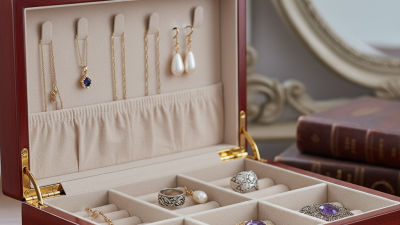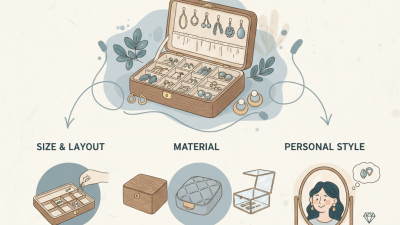
Choosing a reliable partner for Jewelry Storage requires more than comparing prices. Global buyers need products that protect delicate pieces, present them well, and arrive consistently. China’s supplier market includes factories and trading companies offering velvet-lined boxes, travel cases, display trays, and custom packaging. The range is broad. So is the variation in quality.
A useful supplier review starts with the details you can verify. Ask about materials, lining thickness, hinge strength, stitching, and closure performance. Request product samples before approving a large order. A ring box should hold its shape; a drawer tray should fit its intended space. Small defects matter. Loose seams and uneven finishes can change how customers perceive a product.
Buyers should also examine production capacity, customization options, sample timelines, and communication practices. Clear specifications reduce avoidable misunderstandings, especially when colors, dimensions, or logos must match a brand standard. Certifications and inspection reports may be relevant, but their scope should be checked rather than assumed. A polished catalog is not proof of dependable production.
This guide introduces factors for comparing China-based jewelry storage suppliers and preparing more informed sourcing decisions. It cannot replace direct checks. Supplier performance may vary between orders, and even a promising sample has limits. That is worth remembering. With practical questions, documented requirements, and careful sample evaluation, global buyers can identify partners better suited to their product needs and customer expectations.
China Top Jewelry Storage Suppliers for Global Buyers
A reliable China jewelry storage supplier proves consistency with records, not polished product photos. Ask for material specifications, color-control samples, and inspection reports for each production batch. Check whether velvet, microfiber, hinges, and metal fittings match the approved sample. Small differences matter: a slightly rough divider can scratch a polished pendant. Request measurements for compartments and test how clasps close after repeated use. A supplier should also explain lead times, packaging methods, and how it handles defects. Answers should be specific. Vague promises are a warning.
Packaging affects the customer experience, even when the storage case itself is well made. The 2023 National Retail Federation and Appriss Retail report estimated that 14.5% of U.S. retail sales were returned, across categories; it does not isolate jewelry or packaging damage. Still, the figure underlines why careful product protection matters. Ask suppliers to test packed samples for movement, corner impacts, and moisture exposure, then review the results before placing a large order. No test removes every risk.
Tips: Send a physical “golden sample” and a written checklist. Photograph defects under consistent lighting, and agree on acceptable tolerances before production. I have seen teams overlook zipper feel because color checks took priority. That trade-off is easy to regret.
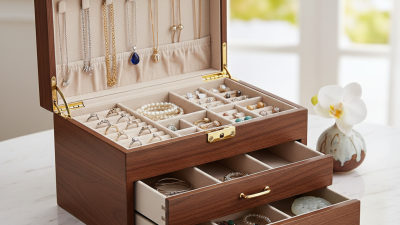
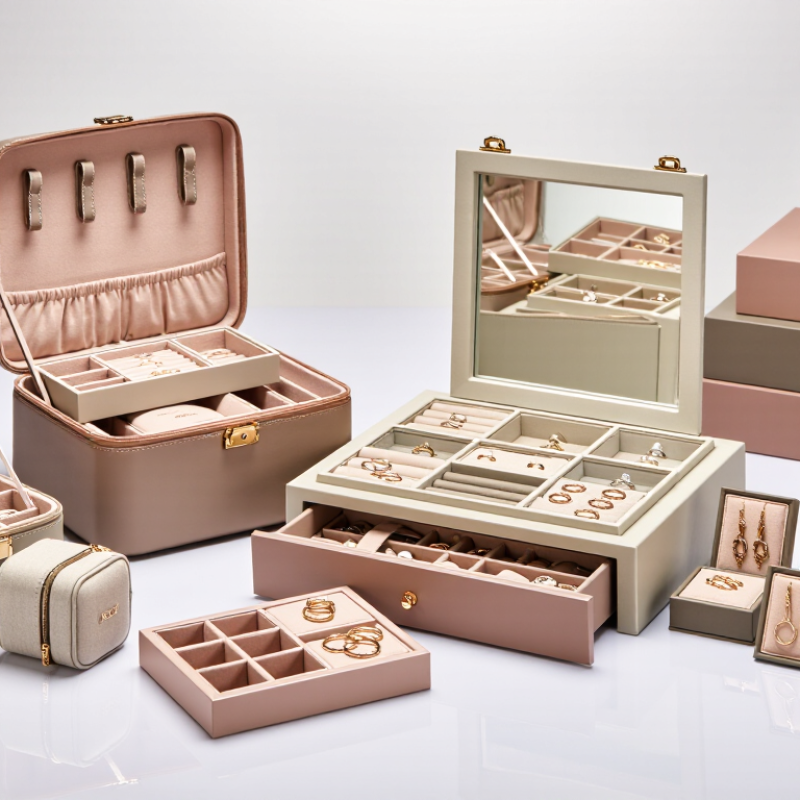
China’s jewelry storage suppliers offer practical formats for retailers, wholesalers, and private-label businesses. Jewelry boxes remain popular for rings, earrings, and small necklaces. They commonly use velvet, linen, paperboard, wood, or synthetic leather exteriors. Interior slots should hold pieces firmly without pressing delicate surfaces.
Drawer trays suit jewelry counters and home organizers. Their removable dividers help separate bracelets, chains, watches, and brooches. Stackable trays save space in narrow cabinets. Some suppliers produce custom foam inserts with measured compartments. Check the foam density carefully. Soft foam protects jewelry, but weak foam can lose shape after repeated use.
Travel cases provide compact storage for customers who carry jewelry frequently. Zippered pouches, folding cases, and small hard-shell cases are common options. Hard cases offer better protection from crushing. Pouches are lighter and less expensive. Watch rolls and necklace organizers serve more specific needs. They often include elastic straps, cushions, hooks, or transparent windows. Display cabinets and countertop stands support retail presentation, while dust-resistant covers reduce cleaning work.
Experienced buyers usually request material samples before placing larger orders. Stitching, hinge strength, odor, lining attachment, and color consistency deserve close inspection. I once underestimated the space needed for long chains; the finished compartments were attractive but impractical. That mistake showed why product drawings should include real jewelry measurements. Confirm carton protection, moisture control, customization limits, sampling costs, and quality inspection procedures with each supplier. Some factories communicate well but still miss small details. Regular sample reviews can expose those gaps early.
Global buyers should evaluate Chinese jewelry storage suppliers through evidence, not attractive catalogs. Product samples reveal more than showroom photos. Check drawer alignment, velvet recovery, odor, hinge strength, and the finish after repeated opening. Request a batch sample from the same production line. A perfect prototype proves little.
The ISO Survey 2022 recorded more than 1.1 million ISO 9001 certificates in China. Certification helps, but it does not replace factory verification. Ask for the certificate number, production scope, audit date, and corrective-action records. Review material specifications for MDF, metal plating, adhesives, and textile linings. Independent laboratory testing should confirm formaldehyde limits, coating adhesion, and load performance. Small details matter. A supplier may pass a document review yet use thinner panels in mass production.
Logistics also deserves measurable scrutiny. The World Bank’s 2023 Logistics Performance Index ranked China 19th globally, with a score of 3.7 out of 5. That supports strong export capability, but delivery still depends on packaging and port planning. Compare carton drop-test results, moisture barriers, pallet dimensions, and shipment photos. Ask for three recent references with similar order volumes. I would not trust unusually low pricing without examining hardware, labor steps, and replacement policies. My own evaluation can be imperfect, especially when factory visits are brief. Remote audits need time-stamped videos, random inspections, and written evidence, not confident promises.
China’s jewelry storage suppliers serve global buyers with boxes, trays, pouches, and display cases. Quality begins with material verification, not attractive photographs. Buyers should check fabric composition, board density, adhesive strength, and surface durability. Measure twice.
During supplier audits, request production samples from different batches. Inspect stitching, hinges, clasps, foam recovery, and plating resistance. A polished sample proves little. Test the item after repeated opening, compression, and humidity exposure. Small defects often appear around corners and glued edges.
Compliance documents should match the actual product and destination market. Ask for material declarations, chemical test reports, factory quality records, and clear traceability. Restrictions on heavy metals, dyes, packaging materials, and wood components may differ by country. Export readiness also depends on accurate product descriptions, tariff classification, carton dimensions, and shipping marks. Confirm Incoterms, insurance responsibility, and moisture protection before production. Suppliers should explain corrective actions when inspections fail, rather than hiding rework. That response reveals more than a perfect presentation. Even experienced buyers can overlook inner packaging damage because the outer carton looks clean. Photographs, written specifications, pre-shipment inspections, and retained samples create stronger evidence for reliable purchasing decisions.
China Top Jewelry Storage Suppliers for Global Buyers
Long-term partnerships begin with clear specifications, not a low first quote. Define dimensions, fabric or lining, insert tolerances, logo placement, and acceptable color variation. Share a marked sample and approve a sealed reference before bulk production. Small details matter: a ring slot that grips too tightly can damage presentation and trigger costly rework.
Build a steady review rhythm. Compare sample and production quality, confirm material changes in writing, and track defect rates, on-time delivery, and response times. McKinsey’s 2020 survey of supply-chain executives found that 93% planned to make their supply chains more resilient. For jewelry-storage buyers, that means discussing backup materials, production capacity, and realistic lead times before peak seasons—not only after a delay. A spreadsheet helps. So does a direct conversation when a number looks wrong.
Trust takes time. Visit the facility when practical, speak with the production and quality teams, and agree on a simple escalation path. Share forecasts, but label estimates clearly; suppliers cannot plan around wishful numbers. Even good systems miss things. A rushed approval once caused a color mismatch that photographs barely showed, but customers noticed. Record the lesson, adjust the approval process, and review corrective actions together.